fun and games for everyone. the cinema of robert nelson
Robert Nelson was born in San Francisco in 1930, into a family of Swedish immigrants. Inspired by the Bay Area Figurative Movement, he trained at the California School of Fine Arts—where he met artists William T. Wiley and Robert Hudson—and devoted himself to painting for 10 years. He was also captivated by Beat literature (Ferlinghetti and the City Lights Bookstore), Funk Art, the acid culture of Haight-Ashbury, the Zen Center, and the I Ching. Throughout his life, Nelson worked as an encyclopedia salesman, carpenter, nightclub doorman, or gas station attendant. He founded the film department at the San Francisco Art Institute, taught at CalArts and the University of Milwaukee, participated in the founding of Canyon Cinema, and was one of the driving forces behind its magazine, Cinemanews.
Plastic Haircut, his first publicly released film, emerged from casual conversations with Wiley, Hudson, and Ron Davis—and it included the first recording by Steve Reich, whose phase-based compositions influenced Nelson’s editing. The collective energy of this process favored collaborations with artists (he made five films with Wiley and two with William Allan), filmmakers (his ex-wife Gunvor Nelson—with whom he shot two home movies, Building Muir Beach House and Last Week at Oona’s Bath— or Mike Henderson), musicians (Steve Reich, The Grateful Dead, Tweedy Brothers, Moving Van Walters and His Truck), and his students. He was also drawn to different theatrical forms that he translated into film: the street theater of the San Francisco Mime Troupe (in addition to Oh Dem Watermelons, conceived for the intermission of A Minstrel Show (Civil Rights from the Cracker Barrel), he filmed their version of Jarry’s Ubu Roi), vaudeville/burlesque in Plastic Haircut, Confessions of a Black Mother Succuba, The Great Blondino, or Elizabethan theatre in Hamlet Act. Nelson’s love of performance is evident in the prophetic tone of King David; his television recreation of the First World War, War Is Hell; or his parody of B-movies in Suite California.
Anarchic comedies sifted through avant-garde films of the 1920s (Vertov, Buñuel), satirized structural cinema, travelogues, landscape and diary films, animated collages (a non-derivative influence from Conner or VanDerBeek), and found footage (television, Hollywood cinema, magazines). In 1965, he completed five films; ten in 1967, the year of the Summer of Love. Each of Nelson’s works is a departure from the previous one, in search of what has never been seen on screen. With a camera, a recorder, a copier, and a projector, he experimented with lenses, shooting speeds, angles, jump cuts, superimpositions, fades, solarizations. He explored the rhetorical and connotative power of language through titles (Hot Leatherette, Deep Westurn), subtitles and visual forms —to translate (Suite California), time (Bleu Shut), address the viewer (Hauling Toto Big), or phonetically transcribe (Oh Dem Watermelons)—, as well as virtually synchronous soundtracks (Bleu Shut, The Awful Backlash, The Off-Handed Jape).
In the 1970s and 1980s, Nelson’s films began to be shown less. After leaving teaching in Milwaukee, he withdrew to a house in the mountains of Mendocino. In the late 1990s, with his films out of circulation due to unstable matter, Nelson decided to reassess his entire filmography (this series is a selection of his more than 40 films). Some of them remained intact, others were revived with new edits or soundtracks, and others, according to Mark Toscano, were creatively destroyed with a paper shredder or by packing them onto cores and lacquering, painting, and turning them into art objects.
Curated and introduced by Francisco Algarín Navarro. Many thanks to Oona Nelson and Mark Toscano, as well as Canyon Cinema and the Academy Film Archive for providing the analogue prints of this program. Images courtesy of the artist, the Academy Film Archive and Canyon Cinema Foundation.
fri 11/09 12:00 | fun and games for everyone: the cinema of robert nelson pt. 1 (screening at pupille)
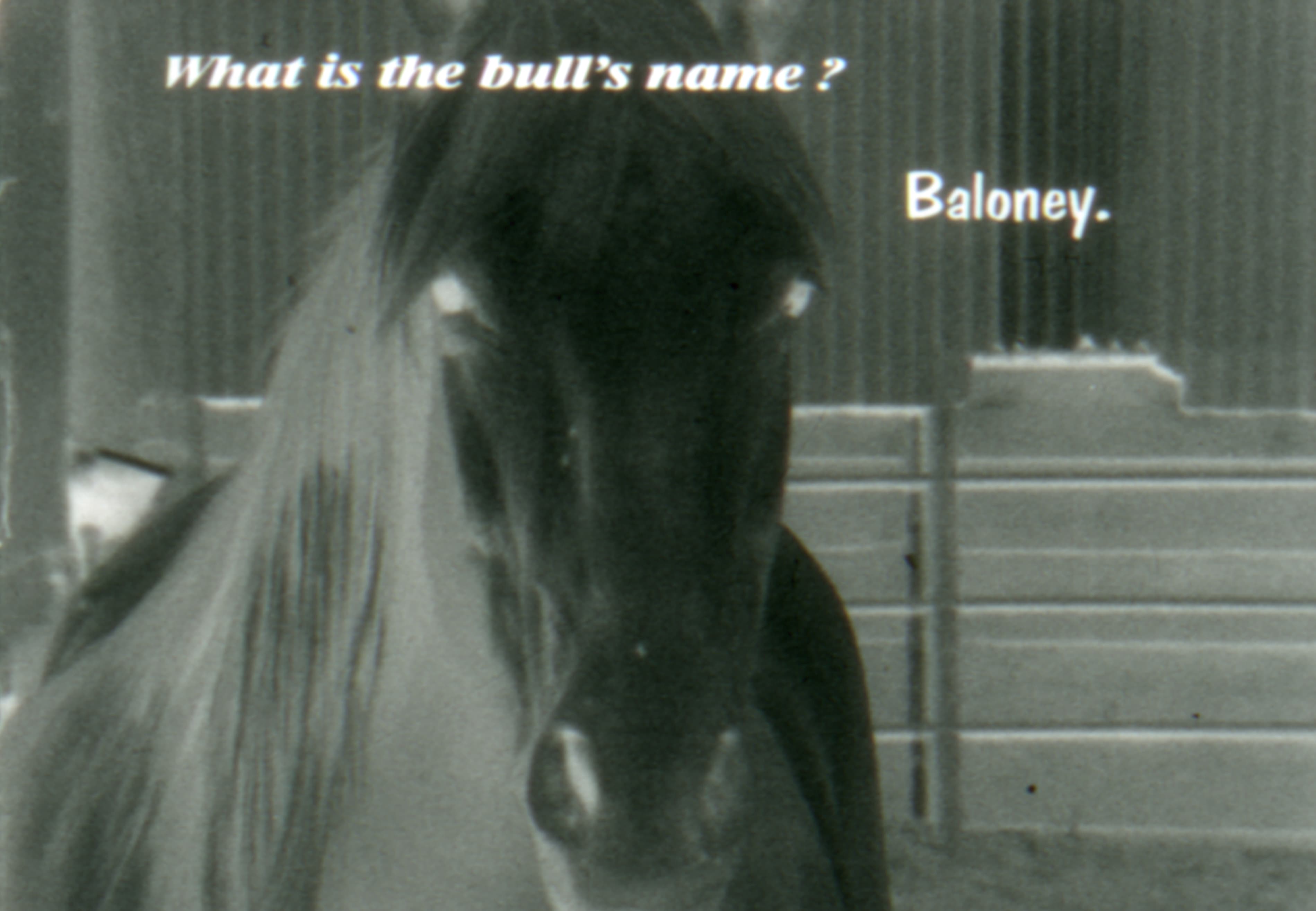
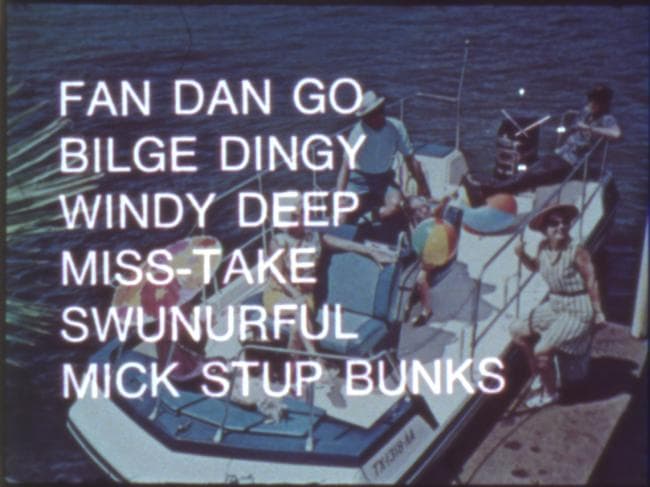
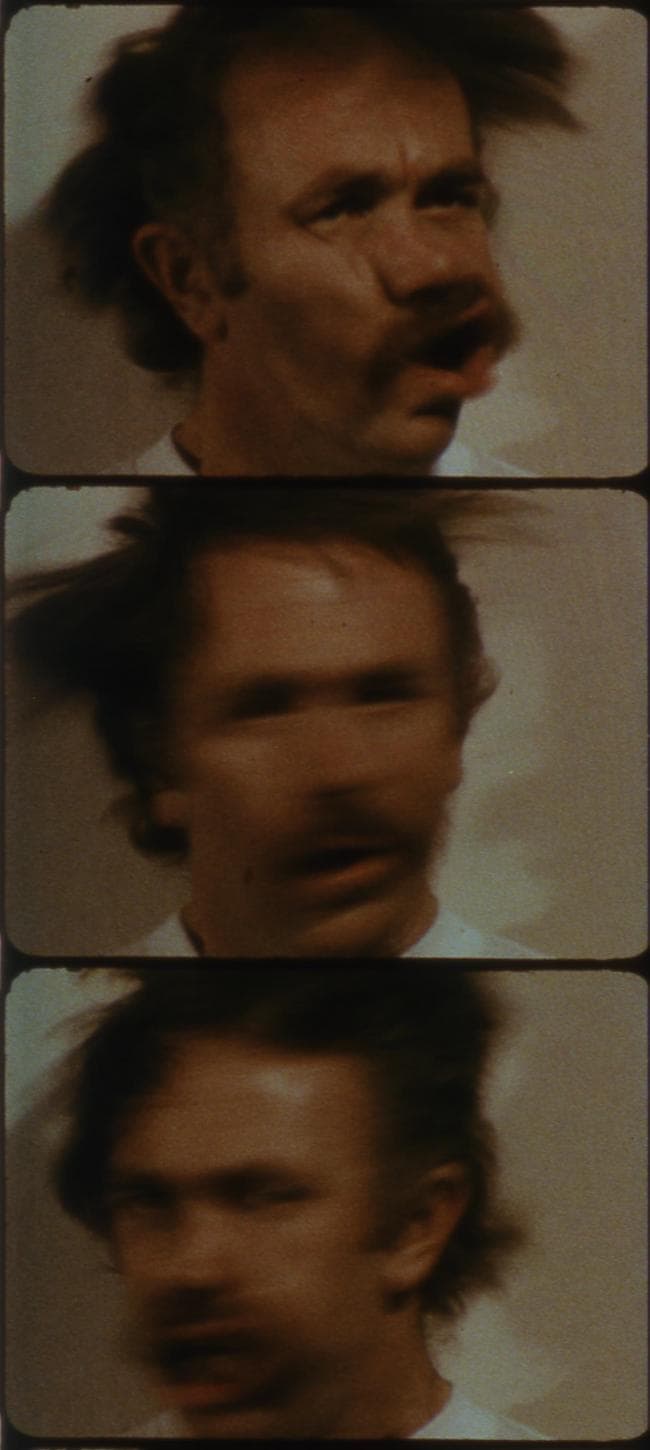
In the single-take film The Awful Backlash, artist William Allam’s hands untangle a fishing line, after which he winds it back onto the reel. The analogy with the projector suggests a durational experience. The Off-Handed Jape repeats the illusion of sound synchrony: the supposed interactions between painter William T. Wiley and Nelson with their mime characters are set in different times and spaces. Oh Dem Watermelons, a parody of racist stereotypes, follows fifteen watermelons as they are abused through the streets of the Mission and Potrero Hill districts. Steve Reich marked the pulse and harmony by recording the choruses of two minstrel show songs with the San Francisco Mime Troupe. Following his technique of phase-shift tape loops, in Penny Bright and Jimmy Witherspoon Nelson superimposed cacophonous recordings of an invented game played with his daughter, alongside TV images captured with his camera-printer. In Limitations, he filmed his Milwaukee students with two opposing cameras 180 degrees apart, in simultaneous views of up to four layers, while Deep Westurn is a group portrait of filmmaker Mike Henderson, sculptor William Geus, Wiley, and Nelson, repeatedly falling off their chairs up to fifteen times. Punishment is satirized in Special Warning, a poem about isolation and sexual guilt. In Hot Leatherette, where Nelson uses single frames and found footage, a pickup truck is driven off a cliff at Stinson Beach. Bleu Shut gives contestants eleven chances to guess the name of a ship within one minute. Their conversations apparently match the photographs, followed by a second minute of “found objects”. A name-like transparent clock embedded in the screen parodies metric cinema.
The Awful Backlash
D: Robert Nelson and William Allan, 16mm, b&w, sound, 14 min, 1967
The Off Handed Jape
D: Robert Nelson and William T. Wiley, 16mm, b&w, sound, 9 min, 1967
Oh Dem Watermelons
D: Robert Nelson, 16mm, color, sound, 11 min, 1965
Penny Bright and Jimmy Witherspoon
D: Robert Nelson, 16mm, color, sound, 4 min, 1967
Limitations
D: Robert Nelson, 16mm, b&w, sound, 9 min, 1988
Deep Westurn
D: Robert Nelson, 16mm, color, sound, 5 min, 1974
Special Warning
D: Robert Nelson, 16mm, b&w a. color, sound, 6 min, 1998
Hot Leatherette
D: Robert Nelson, 16mm, b&w, sound, 5 min, 1967
Bleu Shut
D: Robert Nelson, 16mm, color, sound, 30 min, 1970
fri 11/09 20:30 | fun and games for everyone: the cinema of robert nelson pt. 2 (screening at dff)
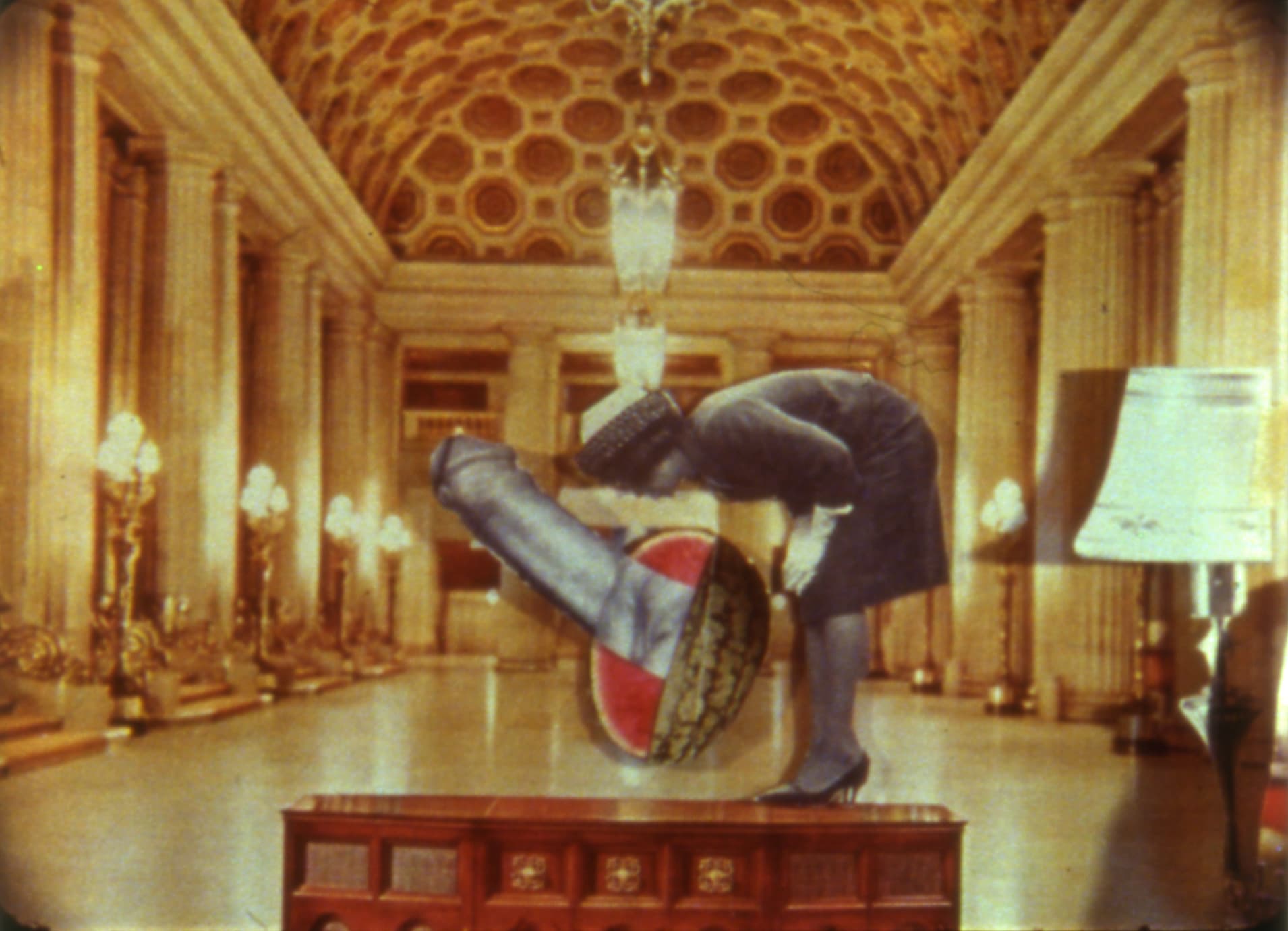
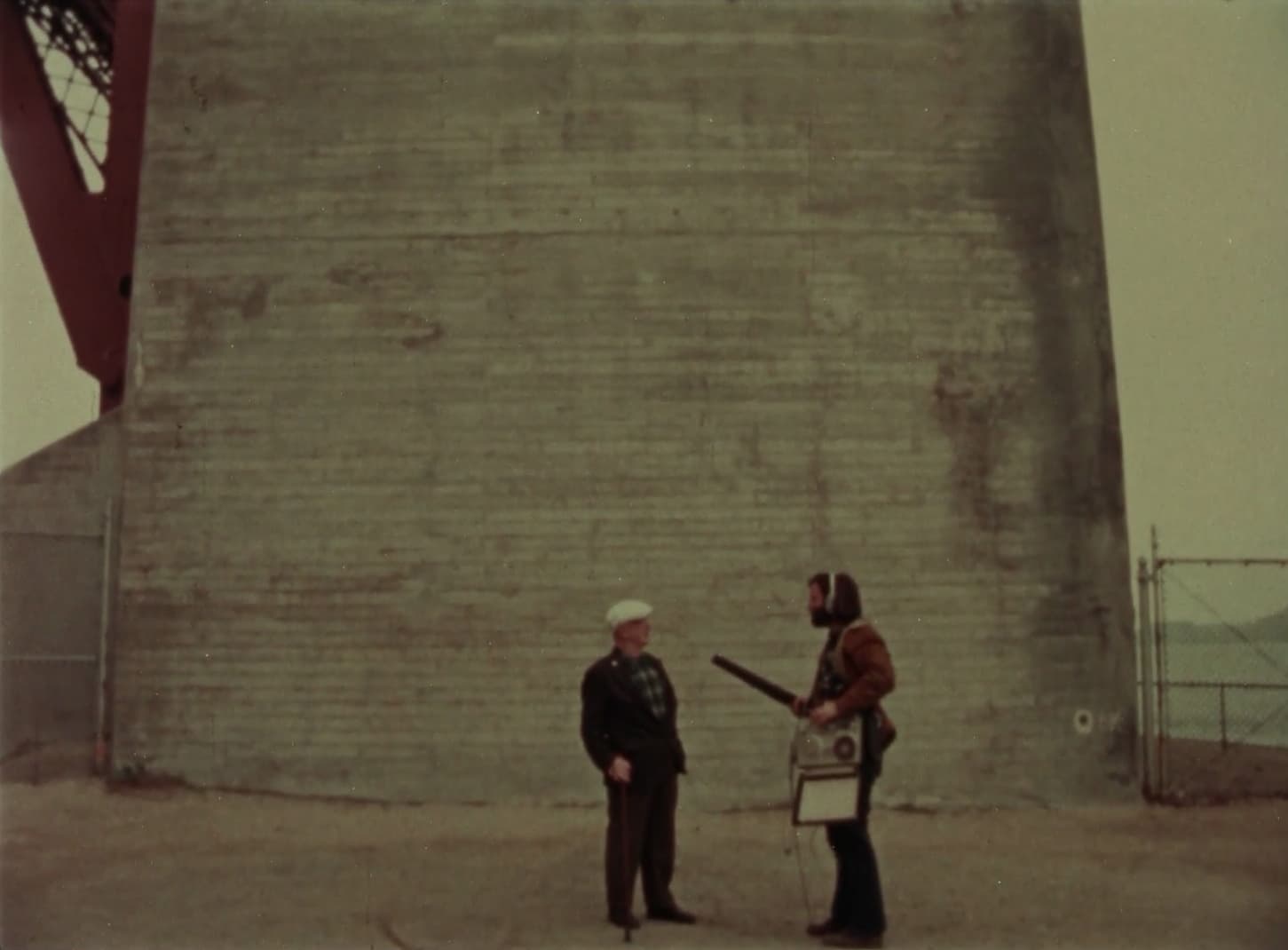
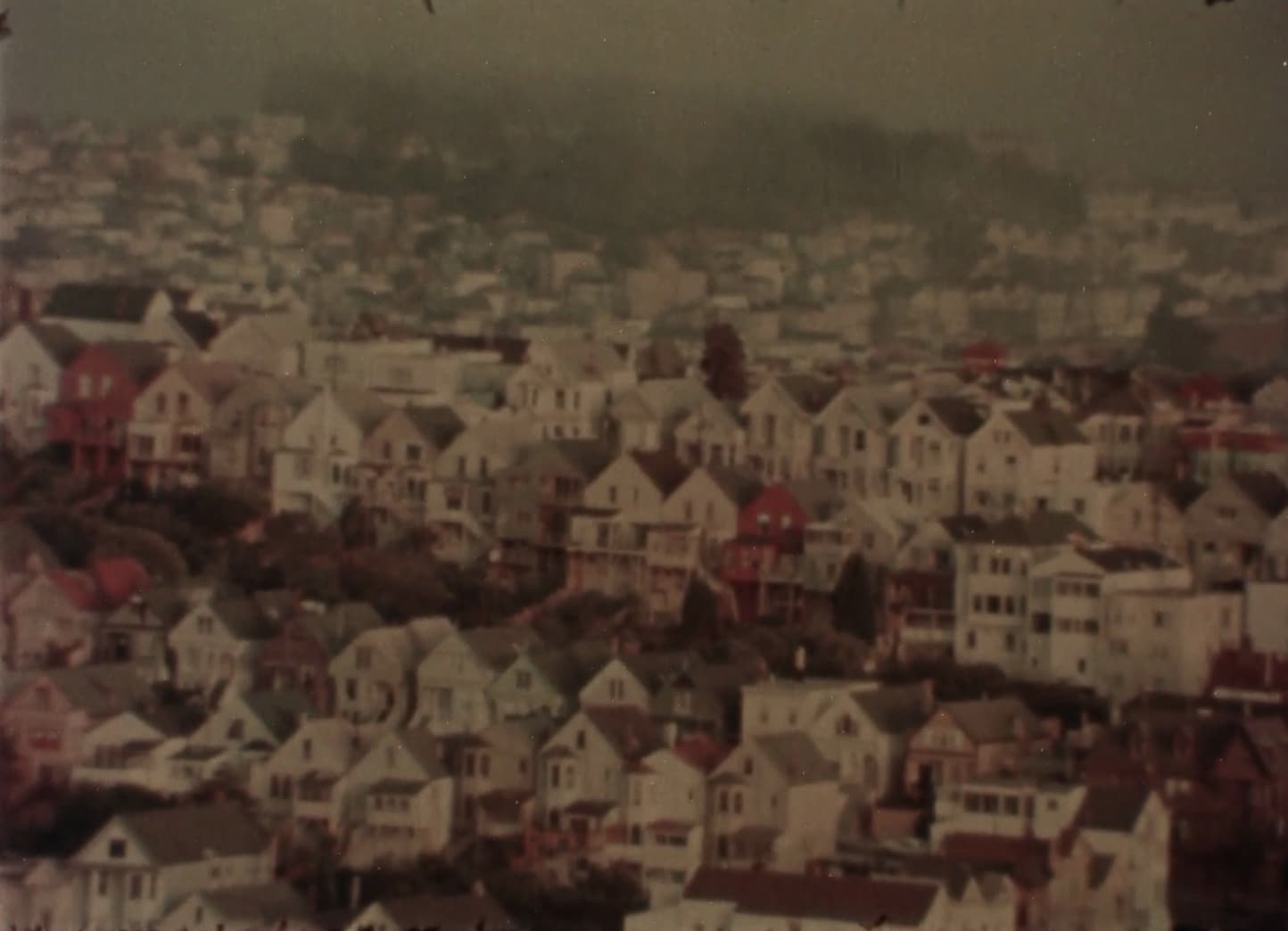
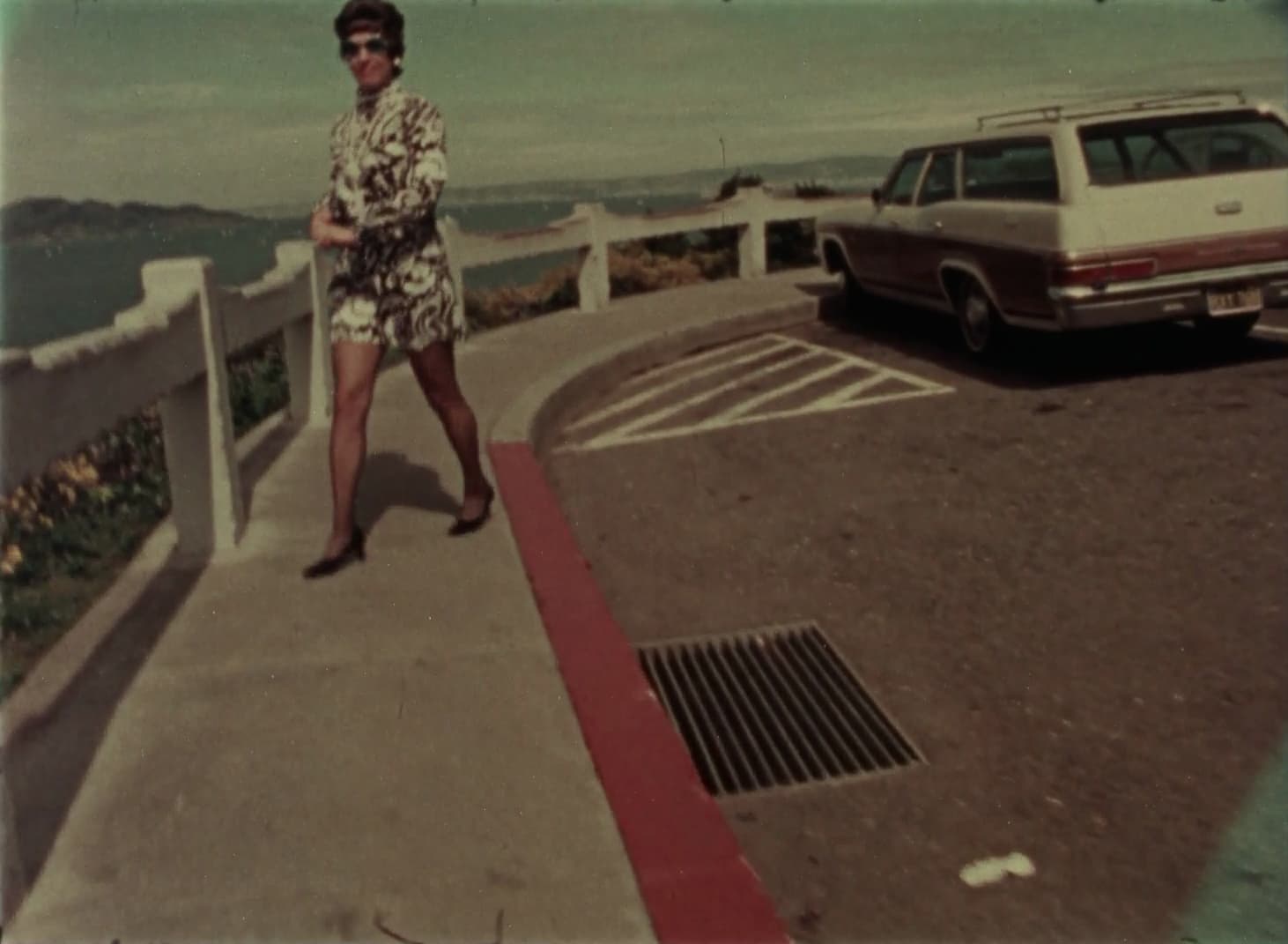
Organizing his suite through eight trajectories or “movements”, Robert Nelson portrays California as an intricate crossroads where geological, historical, political and ecological strata intertwine with the filmmaker’s intimate memory of the territory. In the first part (the negative pole of Suite California: immigration, climatic suffocation, industrial cinema), near the Mexican border, a dynamic cast—a bullfighter and a group of tennis players mysteriously interacting in “gringo-lingo” Spanish—shoots (and parodies) a suspense film. The fractured prologue, a whirlwind of clapperboards, unfolds into recomposed scenes. The premise: successive attempts by a group of Hispanics to cross the border end in a plane crash. Majestic topo-cartographic tracking landscape shots across Death Valley highways leave fiction behind, driving toward Hollywood. Nelson combines a visit to Will Rogers’ estate/mausoleum with bustling views of Hollywood Boulevard. An Edison film on orange pickers is followed by the suffocating pollution of Los Angeles seen from the Hollywood Hills. Central California in the second part delineates the positive pole. Early views of Cliff House and Sutro Baths, panoramic shots of present-day San Francisco, the Deer Hunt and excursions to the Sierra Nevada, together with Nelson’s family history—his father’s role in the construction of the Golden Gate, the compilation of home movies from Christmas celebrations, and the photographic album-collage—, compose the Edenic counterpoint to the first half. Every landmark depends on the gaze inscribed within them.
Suite California Stops & Passes Part 1: Tijuana to Hollywood via Death Valley
D: Robert Nelson, 16mm, b&w a. color, sound, 46 min, 1976
Suite California Stops & Passes Part 2: San Francisco to the Sierra Nevadas & Back Again
D: Robert Nelson, 16mm, b&w a. color, sound, 47 min, 1978
sun 13/09 11:00 | fun and games for everyone: the cinema of robert nelson pt. 3 (screening at dff)
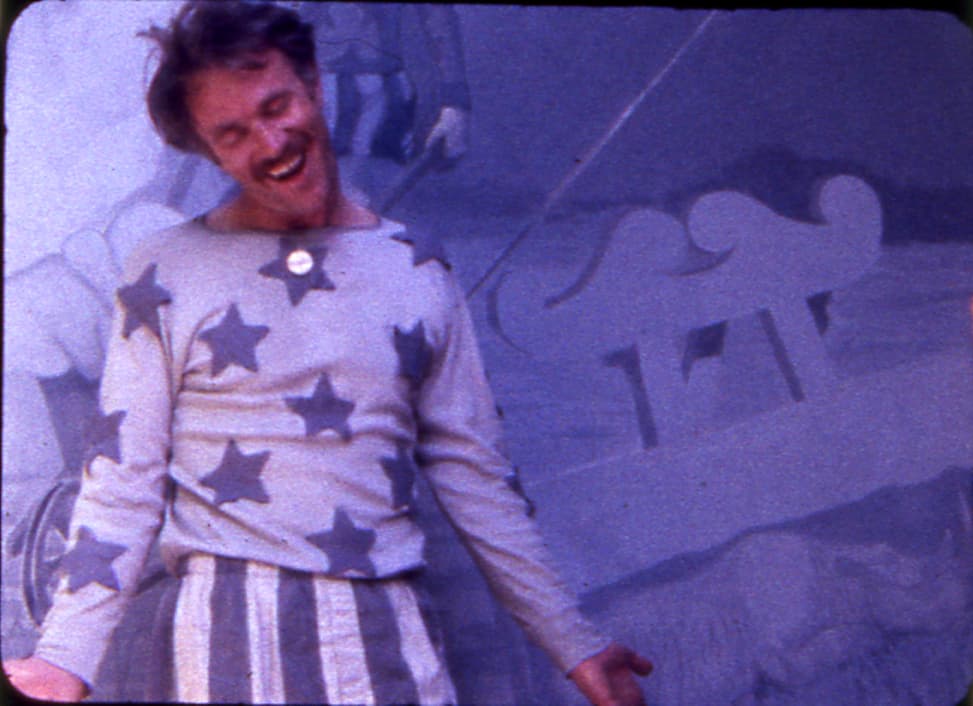
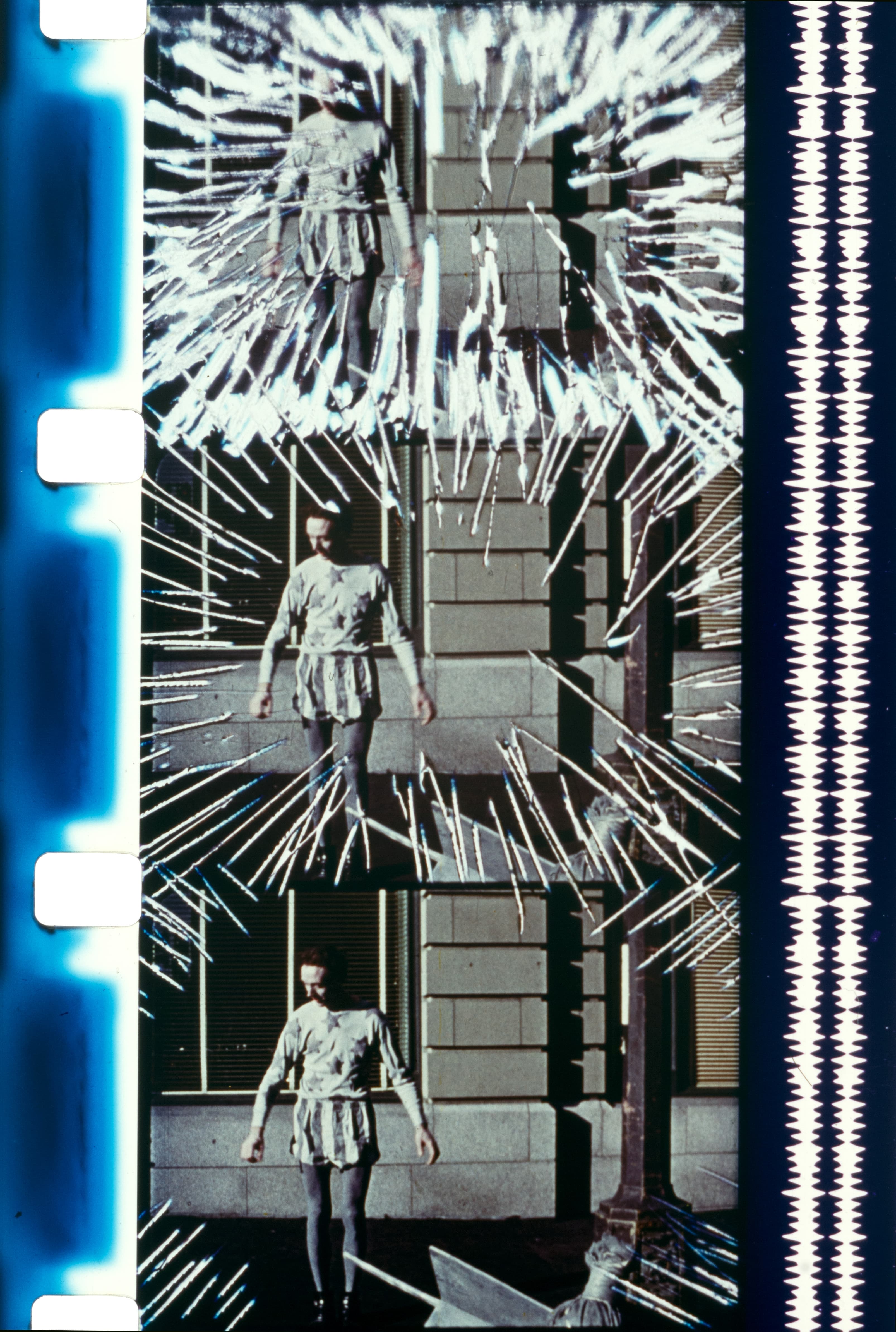
A painting by William T. Wiley of Charles Blondin, the French funambulist who, starting in 1859, repeatedly crossed the Niagara Falls on a high wire (blindfolded, pushing a wheelbarrow, cooking an omelette), was the serendipitous inspiration for The Great Blondino. Nelson and Wiley’s Baudelairean epic (a cross between the episodic picaresque novel and Beat poetry) follows the wanderings of the misfit acrobat through the pop landscape of the Bay Area, induced by the literal logic of dreams (orgies and stripteases) blended with the hallucinatory visions of a perpetual waking state (hippos drinking milk, a question mark floating above his head). Nelson uses distorted lenses, time-lapse, solarization, and a range of trompe-l’oeil effects to portray Blondino’s multiple falls and rebirths, always transcending death. In Half-Open & Lumpy, the found footage playfully accompanies an accelerated song by the children’s band the Tweedy Brothers, while Hauling Toto Big, Nelson’s last film, is a compendium of black-and-white footage, unfinished projects, and earlier films (More, Tiger Stymie, He Sees Blind Horses and Bad Poetry, Limitations) structured in four movements according to the hexagrams of the I Ching, jazz, and poetry. In dense, ecstatic multilayers, the central section of this magnum opus recreates Robert W. Service’s macabre song-poem The Cremation of Sam McGee, where a gold explorer dies frozen during an expedition in the Yukon. In his cremation, he joyfully comes back to life, feeling warmth for the first time since leaving home. \
( Francisco Algarín Navarro )
The Great Blondino Preview
D: Robert Nelson, 16mm, b&w a. color, sound, 4 min, 1967
Hauling Toto Big
D: Robert Nelson, 16mm, color, sound, 43 min, 1997
Half Open & Lumpy
D: Robert Nelson, 16mm, color, sound, 2 min, 1967/1999
The Great Blondino
D: Robert Nelson and William T. Wiley, 16mm, b&w a. color, sound, 42 min, 1967